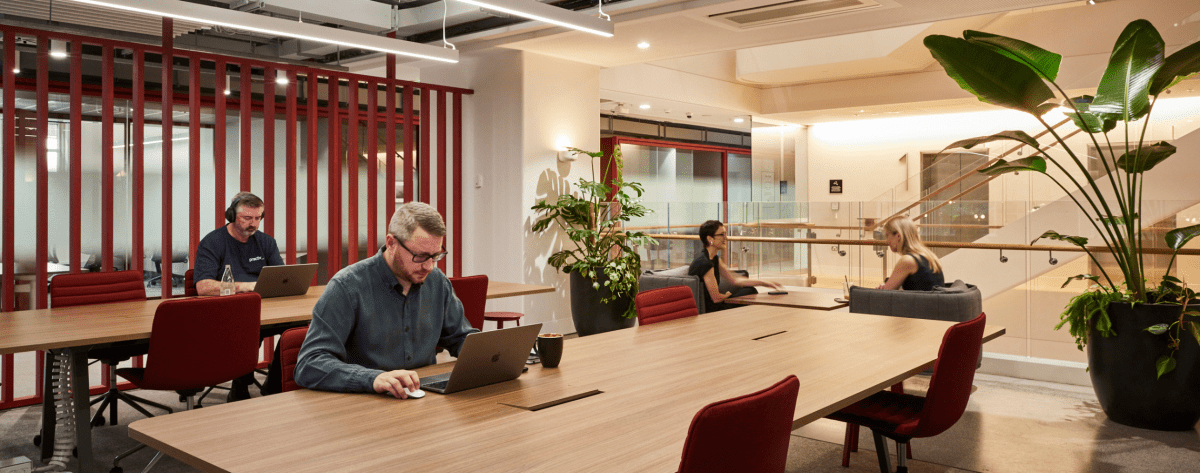
5 Reasons Hot Desking Can Boost Team Productivity
Hybrid work has become the norm, and workers are eager to stay in positions that offer flexibility and a work/life balance. Hot desking is one option organisations can implement to make the most of a hybrid work style and give their workers the resources to achieve more.
What Is Hot Desking and How It Works
Hot desking is an office system where workers do not have a permanent, assigned desk. Instead, they use any open workspace on a first-come, first-served basis or reserve a desk through a booking system as needed. For business leaders, HR managers, and companies evaluating flexible workspace options, this approach can reduce office costs, support hybrid work, improve productivity, and encourage collaboration.
Let’s explore how hot desks work, how they compare with traditional assigned desks, the main benefits and challenges, and what you need to implement them well.
Flexibility: Adapting Workstations to Your Team’s Needs
The flexibility to work in different areas around an office gives employees a chance to choose environments based on what they need day to day. This freedom can promote creativity and innovation.
With many employees splitting their time between home and the office, hot desking facilitates a hybrid model. Team members can work from home when they need to and book a space instead of feeling guilty about having a dedicated desk go unused.
This flexible approach also showcases an organisation’s commitment to providing their people with work/life balance, which can help with employee satisfaction and retention.
Encouraging Collaboration Through Hot Desking
Dedicated workspaces or silos can sometimes keep ideas and expertise in one area. Employees are reliant on emails and messages that can sometimes get lost when they need cross-functional advice.
Hot-desking fosters collaboration because, without fixed desks, employees can choose their workspace based on their tasks or work from anywhere in the office, which can encourage more spontaneous interactions and meaningful sharing of knowledge and expertise in real time among different professionals.
Moreover, switching desks exposes employees to different perspectives, and seeing another work style can strengthen collaboration, resulting in faster problem-solving and a stronger team dynamic.
Cost Benefits of Hot Desks for Growing Businesses
When companies take a more flexible approach, they can cut business costs in a big way. With fewer assigned desks, businesses need less office space, which means saving money on rent and other expenses. Using less space also lowers the carbon footprint, helping meet sustainability goals and showing corporate responsibility.
How Hot Desking Improves Employee Productivity
- Cross-Team Collaboration: When employees sit near different coworkers each day, it helps break down barriers between departments and makes it easier to solve problems quickly.
- Task-Based Flexibility: Employees can pick quiet areas when they need to focus or choose open spaces for group discussions, so their workspace matches what they need to do.
- Clean Work Environments: Without permanent personal items on desks, clutter is less likely to build up, which helps keep work areas neat.
- Greater Autonomy: Letting staff choose where they sit gives them more control over their workday, which can boost job satisfaction and engagement.
- Efficient Hybrid Support: Flexible seating makes it easy to adjust to changing in-office schedules and helps prevent desks from going unused.
Tips for Implementing Hot Desks Successfully
Choose the Right Technology for Hot Desk Booking
The right technology can make or break a hot desking system. Choose a platform that tracks space and lets people book desks easily from their phone or computer.
Establish Clear Guidelines
Make sure everyone understands how hot desking works. Employees need to know how to book a desk, where to find equipment, and what etiquette to follow so they have a good experience. Guidelines should also explain access to facilities and office amenities, including printing facilities and meeting rooms.
Encourage a Culture of Flexibility
Managers can encourage flexibility by setting an example and building a culture that adapts to change. Ensure employees are trained up in the booking system and that everyone is on the same page when it comes to hot desks.
Facilitate Ergonomic Workspaces
There’s no point in having a flexible workspace if the equipment isn’t comfortable to use. Give employees ergonomic desks and chairs, and make sure they have secure lockers for their belongings. This helps everyone stay productive and comfortable.
Monitor, Evaluate, and Optimise
Keep an eye on how often desks are used and ask employees how they feel about the setup. Use this feedback and data to improve booking systems and office layouts over time.
Hot Desking Solutions vs Traditional Desks
Hot desking and traditional desks are two different ways to manage office space, and each has its advantages and disadvantages.
Hot desking gives employees the flexibility to choose any open seat, which works well for hybrid work schedules. It helps save on office costs and makes it easier for team members to work together. On the downside, employees may have to look for a desk each day, and there can be concerns about cleanliness.
Traditional desks give employees a personal and steady workspace where they can keep their things and follow a regular routine. This setup is more secure, which is helpful for jobs that need privacy. But if people work from home, assigned desks might sit empty, leading to wasted space and higher costs.
Common Challenges and How to Overcome Them
Hot desking can present several common challenges, including the search for a desk, noise and distractions, and a lack of personal space. These issues can be addressed by implementing smart reservation tools, establishing quiet zones, and providing personal lockers.
Finding a Desk and Teammates
Employees often waste time searching for an available seat. This is why a digital desk booking system is best practice, allowing staff to reserve a spot in advance.
If teams become fragmented, making collaboration difficult, you can create designated team “neighbourhoods” on interactive office maps.
Noise and Focus
Open office layouts can be noisy, which can affect some people’s concentration. Quiet zones and private phone booths are great ways to ensure employees can lock in when they need to without distractions.
Comfort and Cleanliness
Some employees might enjoy the comfort of having personal belongings at their desk; using team neighbourhoods and putting up pictures and seasonal decorations can help make the space still feel personable. Using daily lockers for secure storage of personal items can also be very useful.
For sanitary reasons, it’s important to have a clean-desk policy and make sure to supply cleaning wipes at each desk.
FAQs – Hot Desking for Your Team
What is the purpose of hot desking?
Hot desking can often be a smart business choice to lower overhead costs, turning unused space into a resource, aligning costs with actual workforce needs. It also aligns with the current desire for a flexible work environment many people are seeking.
What are the disadvantages of hot desking?
There is limited personal storage and potential disorganisation. Hygiene concerns and anxiety about desk availability can also be tricky. Effective policies, booking software, and community-focused amenities can help address these issues.
Is hot desking still a relevant practice?
Yes, hot desking is increasingly relevant as it aligns with hybrid work, which has almost become the standard these days. It supports businesses in adapting to flexible work environments, promoting productivity without fixed office spaces.
How does hot desking benefit organisations financially?
Hot desking reduces real estate costs by minimising the space needed per employee and can even allow businesses to monetise unused areas, turning overhead into revenue.
How does hot desking support hybrid work?
Hot desking provides flexibility for hybrid work models, allowing employees to choose suitable environments for tasks, whether they involve focused work or collaboration. It fosters a borderless professional ecosystem.
Flexibility is the Future
If you’re looking to implement hot desking in your workplace, consider using Hub Australia to book your workspace. Hub Australia offers a range of options that cater to diverse business needs, ensuring your team has the perfect environment to thrive. Start exploring your workspace possibilities today and discover how flexibility can elevate your team’s performance.